
Chesterfield County, VA
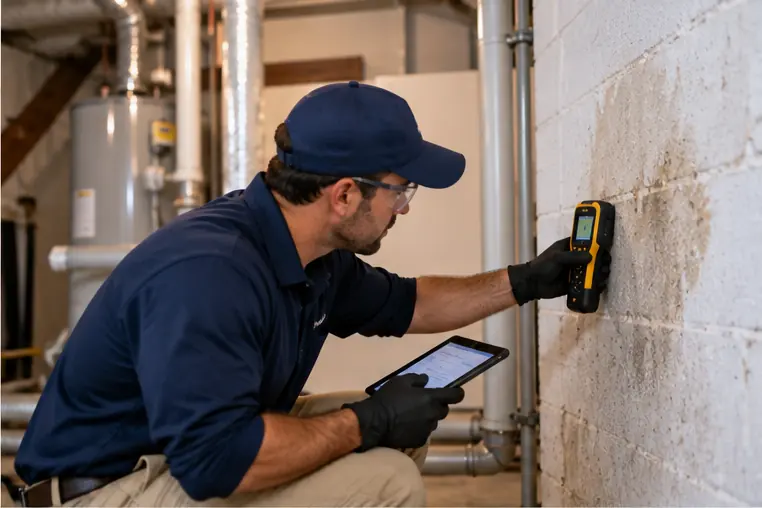
Measured first. Moisture readings decide what stays and what goes.
Chesterfield, Virginia · Mold Remediation & Cleanup
Mold Removal Chesterfield VA
The finished basement that smells stale every time it rains. The bathroom ceiling that never quite dries out. The crawl space under an older house that feels damp in August. Mold removal in Chesterfield VA starts with the question behind all three: where is the moisture coming from? Once that is answered, the affected materials can be cleaned or removed under containment and the area dried so the problem does not come back.
You don’t need to know if it is mold. Tell us what you see and where, and we’ll explain the next practical step.
- Moisture Source FirstThe leak or humidity is traced before anything is removed.
- Contained Work AreasSealed barriers keep the rest of the home clean.
- HEPA Air FiltrationFiltered air and HEPA cleaning while materials are disturbed.
- Documented ScopePhotos, readings and a written plan you can keep.
- Residential & CommercialHouses, rentals, offices and retail spaces.
Mold Removal in Chesterfield VA at a Glance
What We Help With
Visible growth, damp or stained building materials and moisture problems that need professional remediation.
When to Call
After a leak or water getting in, when dampness returns season after season, or when growth or a musty smell appears.
What Happens First
We discuss the property, pinpoint the likely moisture source, look at the affected area and agree on an approach.
Where We Serve
Chesterfield County, Virginia. Call to confirm your address before booking.
The Goal
A corrected moisture source, contained work, affected materials cleaned or removed, and a drier space.
How we approach it
Mold Remediation for Chesterfield Homes & Properties
Good remediation removes as little as it needs to and corrects the reason growth started. The first visit is about measurement: moisture meters on walls, floors and framing, thermal imaging where it helps, and a look at what is feeding the problem, whether that is a roof leak, a sweating air handler or water coming through a foundation wall.
Then the materials are sorted. Porous items with growth, such as drywall, insulation or carpet pad, are cut out and bagged. Framing, block and other solid surfaces are usually cleaned in place. The work area is sealed, HEPA air filtration runs while material is disturbed, exposed surfaces are HEPA vacuumed and wiped, and the space is dried and checked with readings before it is closed up. You receive the photos and readings along with a written summary.
What we do
- Trace and correct the moisture source
- Remove only porous materials that hold growth
- Clean solid materials in place
- Contain the work area and filter the air
- Dry and verify with readings
What we avoid
- Tearing out sound materials “just in case”
- Spraying over growth without removing it
- Closing walls before they are dry
- Leaving the moisture source for later
Situations we see
Where Does Moisture Cause Trouble in Chesterfield Properties?
Every property is different, and many have none of these. They are simply the patterns that sit behind most growth in houses and light commercial buildings around the county.
Finished Basement After Heavy Rain
What may be happening: Water reaches the foundation from a downspout, grading or saturated soil and wicks into drywall and carpet along the lower wall.
What should be checked: Exterior drainage, the wall base, carpet pad and how high the moisture climbed.
Crawl Space With Seasonal Dampness
What may be happening: Humid summer air meets cool ground and pipes, and joists and insulation stay damp through the season.
What should be checked: Wood moisture content, vapor barrier coverage, vents and any plumbing drips.
Older Bon Air Area Home
What may be happening: Plaster walls, older framing and a few generations of repairs can hide where water is traveling.
What should be checked: Past patches, roof and window flashing, and readings across original materials.
Midlothian Home With HVAC Condensation
What may be happening: An attic or closet air handler with a slow condensate drain keeps nearby framing and drywall wet.
What should be checked: Drain pan and line, duct insulation, and the ceiling or wall around the unit.
Kitchen or Laundry Plumbing Leak
What may be happening: A supply line, dishwasher or washer hose drips behind a cabinet or appliance for weeks.
What should be checked: Cabinet bases, subfloor, the wall cavity behind and the floor below.
Bathroom Ventilation Problem
What may be happening: A fan that is undersized or vents into the attic leaves moisture on the ceiling after every shower.
What should be checked: Fan ducting, ceiling drywall, the attic above and grout and caulk lines.
The underlying cause
Why Moisture Matters
Mold is a symptom; moisture is the condition that allows it. Spores drift through every home, and they settle harmlessly until a surface stays damp. Drywall paper, wood and dust on insulation then become food. Federal EPA guidance is to dry wet building materials within 24 to 48 hours where possible, because speed limits how far growth can get.
For the same reason, remediation that skips the moisture condition rarely lasts. A cleaned basement wall that still takes on water after storms will need the same work again next year.
Local context
How Do We Approach Chesterfield Properties?
Chesterfield is a county of contrasts: a 19th century resort village in Bon Air, long established neighborhoods, and decades of suburban growth around Midlothian and beyond. Those differences matter, because the age and construction of a house change where moisture comes from and how its materials should be handled.
Stormwater & Drainage
Chesterfield County’s Environmental Engineering division oversees the engineering, construction and maintenance of the county storm sewer system under a state stormwater permit. Those public systems carry runoff away from streets; what happens on an individual lot, such as downspouts, grading and sump pumps, decides whether rainwater ends up against a foundation.
Bon Air & Established Neighborhoods
Bon Air started in 1877 as a resort reached by rail from Richmond, and its Victorian cottages still line Buford Road. The county identifies it as a National Historic District with more than 30 buildings from the late 19th and early 20th centuries. Older plaster, framing and past alterations can make moisture harder to trace, which shapes how we assess it.
Midlothian’s Mixed Housing
Midlothian sits on a long history, including the coal mining era remembered at Mid Lothian Mines Park, and today its older homes stand alongside decades of newer subdivisions. The moisture sources differ: aging plumbing and crawl spaces in one house, finished basements and attic air handlers in the next.
Historic Properties
The county keeps a list of designated landmarks that includes houses, churches, schools and farms. When a building like that is involved, original materials deserve a slower, more careful evaluation before anything is removed.
Newer Chesterfield Homes
New construction has its own moisture patterns: tight envelopes that hold humidity, long plumbing runs, HVAC condensate lines and roof or window details that leak. These problems often stay hidden until a stain or smell shows up.
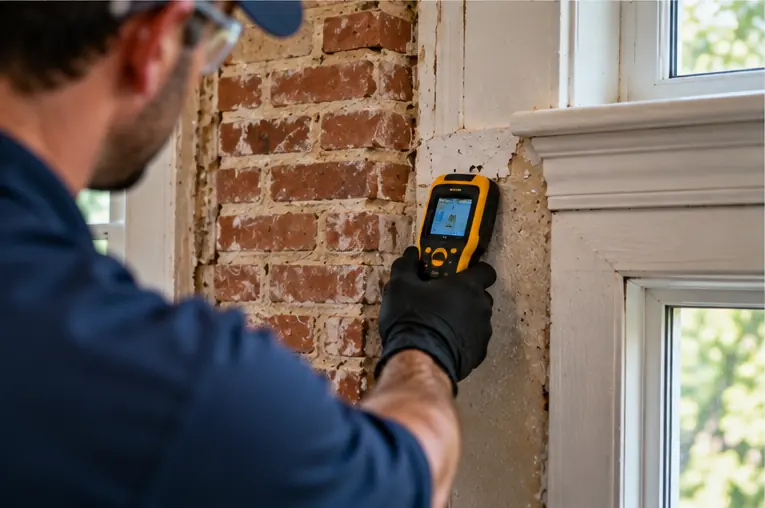
Historic and older homes
Older Materials Need the Right Approach
Brick, plaster on lath, old growth wood framing and layers of earlier repairs absorb and release moisture differently from modern drywall assemblies. Readings are compared across materials, and cleaning and drying are favored over removal wherever they work.
Local source: Chesterfield County Stormwater Management Program
Seven steps
What Our Mold Remediation Process Involves
- 01
Initial Conversation
What you see, where, and how long it has been happening.
- 02
Moisture & Area Assessment
Readings map the wet area and point to the source.
- 03
Containment Planning
Barriers and airflow set so work stays in one space.
- 04
Removal & Cleanup
Porous materials with growth removed; solid ones cleaned.
- 05
HEPA Filtration & Controls
Air scrubbing and HEPA vacuuming throughout.
- 06
Drying & Moisture Correction
Source corrected, materials dried before closing up.
- 07
Final Review & Documentation
Readings, photos and notes on what to watch.
See each stage in detail on Our Process page.
Where we work
Common Areas We Help With
Basements
Lower walls and floors where rain or groundwater finds a way in.
Crawl Spaces
Joists, subfloor and insulation over damp ground.
Attics
Sheathing under roof leaks and around bath fan exhaust.
Bathrooms
Ceilings and tub walls in rooms that stay humid.
Kitchens
Sink cabinets, dishwashers and refrigerator lines.
Laundry & Utility Areas
Washer hoses, water heaters and utility sinks.
Bedrooms & Living Spaces
Cold exterior corners, closets and window walls.
HVAC & Mechanical Areas
Air handlers, condensate drains and duct runs.
Images are illustrative and do not depict a specific Chesterfield project.
Wondering if it is mold, and whether walls need to come out?
Most questions can be answered on a short call. Tell us where the moisture or growth is and we will talk you through it.
Water damage restoration
Water Damage Restoration in Chesterfield, VA
Water damage restoration in Chesterfield, VA starts with getting water out of the house and air moving the same day, before drywall and carpet pad soak through. We take those calls 24/7, from Midlothian finished basements to older Bon Air homes.
Most county calls trace back to a handful of causes: a sump that stalled in a summer downpour, a water heater that gave out, an attic air handler with a clogged drain line, or a supply pipe that split during a cold snap. Standing water is extracted, wet pad and the lowest strip of drywall come out only where meters say they won’t dry, and dehumidifiers run with daily readings until the structure is back to normal.
- Shut off the supply and power to wet rooms
- Extract the water and mark every damp wall
- Run dehumidifiers until meters read normal
- Look for growth before anything is closed up
Our water damage restoration page explains the equipment and drying steps in more detail.
What Does Mold Removal Cost in Chesterfield?
There is no honest flat price without understanding the scope. These are the factors that set it:
- Affected area
- Materials involved
- Access
- Moisture source
- Containment
- Amount removed
- Drying
- Repairs
The scope and price are explained before work starts, so there are no surprises midway.
Why Do Chesterfield Property Owners Choose Professional Remediation?
- ClarityYou know what was found and what has to go before work starts.
- ContainmentThe work stays in the affected area.
- Source AwarenessThe cause is corrected, not just the visible growth.
- Professional EquipmentMeters, HEPA filtration and drying equipment.
- DocumentationPhotos, readings and a written scope.
- Clear Next StepsWhat happens now, and what to watch later.
Learn more about our broader Mold Remediation services.
Service area
Serving Chesterfield and Nearby Areas
We work across Chesterfield County, from established areas like Bon Air to the newer neighborhoods spreading west and south. If you are unsure whether we reach your address, call and we will confirm before booking.
We do not have a Chesterfield office. Our team works from 715 Hull St, Richmond, VA 23224, on the Hull Street corridor that runs south into the county, and Chesterfield visits are scheduled by phone.
Richmond
Downtown · The Fan · Church Hill · Manchester · Museum District · West End
Henrico County
Short Pump · Glen Allen
Chesterfield County
Midlothian · Bon Air
Hanover County
Nearby Cities
Petersburg · Colonial Heights · Fredericksburg · Newport News
FAQ
Chesterfield Mold & Moisture Questions
Concerned About Moisture or Visible Growth?
You do not have to diagnose it yourself. Call, describe what you are seeing in your Chesterfield property, and we will explain the next step, starting with understanding the building and where the moisture comes from.
Mold Removal Chesterfield VA · (804) 392-9142